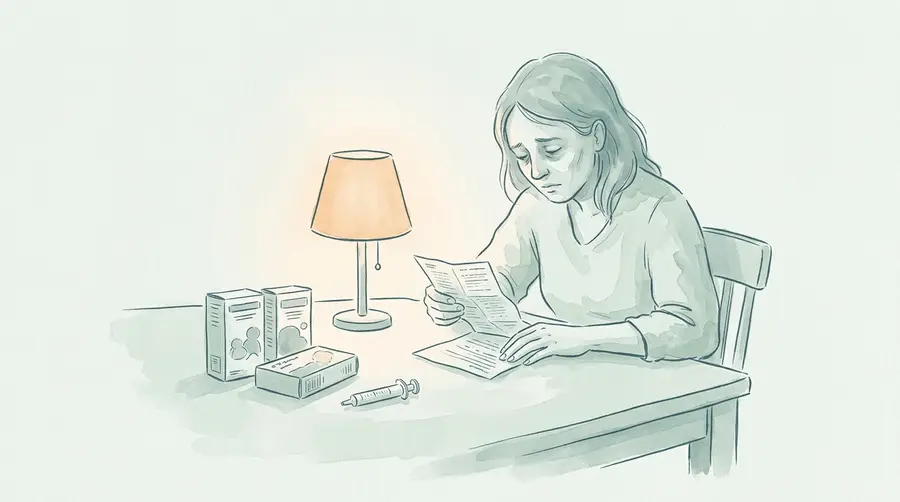
Mom Works the Night Shift – And Nobody Knows When the Last Fever Suppository Was Given

This blog only provides tips, tricks and hints and does not replace a doctor visit. For severe symptoms, always consult a doctor.
At a glance
- ✓Paracetamol can be given at most every 6 hours, ibuprofen every 8 hours — misjudging timing is the risk.
- ✓When parents take turns, handover information about the last medication dose is often missing.
- ✓A shared log (time + medication + dose) prevents double-dosing and unnecessary waiting.
Table of Contents
- Warum ist der Zeitpunkt bei Fiebermitteln so wichtig?
- Warum scheitern Medikamenten-Übergaben bei Schichteltern?
- Wie behaltet ihr als Familie den Überblick?
- Wann müsst ihr sofort zum Arzt?
- Häufige Fragen zu Fiebermitteln und Zeitabständen
- Was tun, wenn ich nicht weiß, wann die letzte Dosis war?
- Darf man Paracetamol und Ibuprofen abwechseln?
- Wie lange wirkt ein Fieberzäpfchen?
It's 6:30 in the morning. You come home exhausted after a long night. Your partner is already pulling on his jacket, grabbing his bag – he's got the early shift. Your child is in bed with a fever of 39.4 °C. "Did he get anything during the night?" – "I think so... around half past three? Or was it three?"
The most important thing upfront: The timing of the last dose is not a minor detail. Giving paracetamol too soon can strain the liver; doing the same with ibuprofen can affect the kidneys. In most cases, a simple shared log prevents this entirely – here's how.
Important: This article is not a substitute for medical advice. When in doubt or in an emergency, contact 999 (in an emergency), NHS 111, or your GP.
Why Does Timing Really Matter with Fever Medication?
Both paracetamol and ibuprofen are very safe medications when used correctly – but both have strict minimum intervals that must be respected. An overdose of paracetamol can cause serious liver damage; too-frequent ibuprofen can harm the kidneys. Knowing when the last dose was given is a real medical data point, not a formality.
Both are dosed by body weight and must only be given at specific intervals:
| Medication | Minimum Interval | Maximum Doses per Day |
|---|---|---|
| Paracetamol | 6 hours | 4× daily |
| Ibuprofen | 6–8 hours | 3× daily |
⚠️ Important: The signs of an overdose in children are initially nonspecific – nausea, stomach pain – and are easily mistaken for symptoms of the underlying illness. That's why knowing the time of the last dose is real information, not a minor detail.
This doesn't mean you should be afraid of these medications. It means: Keeping track is part of using them safely.
Why Do Medication Handovers Fail in Shift-Work Families?
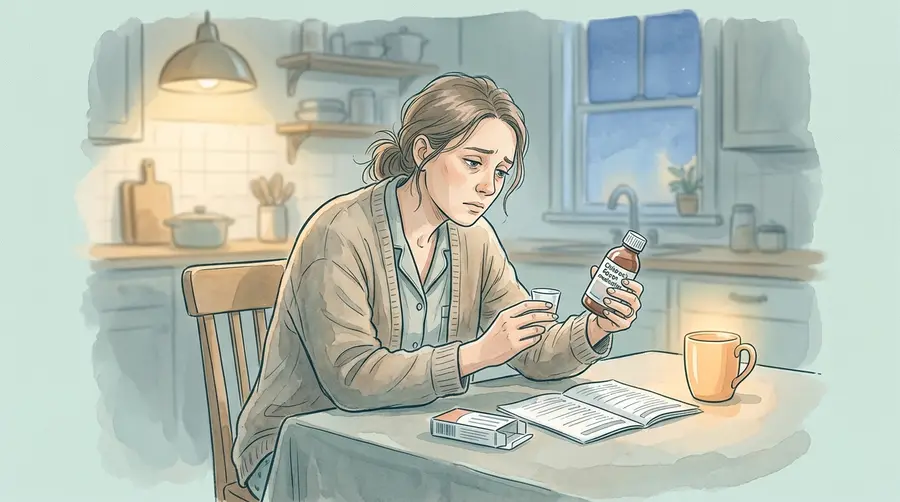
In families where parents work shifts, there's often no calm handover. Exhausted parents remember times unreliably – not because they're careless, but because memory under sleep deprivation simply doesn't work accurately. Someone caring for a crying child at 3 AM isn't storing precise timestamps.
You cross paths. You wave. You scribble a note that the other person skims under time pressure – or doesn't find at all. The result:
- Intervals too short, because you're unsure and want to play it safe.
- Intervals too long, because you don't know what was already given and skip the dose entirely.
Neither is ideal.
When you take turns at night …
Mona Premium automatically syncs entries between partner devices, so no one doubles up on paracetamol.
How Can Your Family Stay on Top of It?
The simplest solution is also the most obvious: write down what was given and when. In the middle of fever stress, with a sick child, no sleep, and a partner heading out the door, this often just doesn't happen. A shared digital log that both parents can see in real time solves this reliably.
💡 Tip: A shared digital log that both parents can see in real time solves the handover problem:
- Mom gives a suppository at 3:17 AM and logs it.
- Dad sees it at 6:30 AM on his phone before leaving.
- Grandma, who takes over at noon, can see the full history.
No sticky notes. No "I think so." No guessing.
That's exactly what Mona Symptom Diary is built for: An app where you log medication doses, temperatures, times, and notes – and share it with your family so everyone is always on the same page.
When Should You See a Doctor Immediately?
When clear red-flag signs are present, the timing of the last dose becomes secondary: babies under three months with a fever from 38 °C, febrile seizures, breathing trouble, persistent listlessness or a child refusing all fluids belong in medical hands right away – regardless of the log. For everything else, NHS 111 is usually enough.
In babies under 3 months, a temperature of 38°C or above needs urgent medical advice — contact a GP or call NHS 111 straight away (call 999 or go to A&E if your baby seems seriously unwell). In babies 3–6 months with a temperature of 39°C or above, call NHS 111 or see a GP. Beyond that, what matters is how unwell your child seems, not the exact number.
🚨 Call 999 or go to A&E immediately if your child:
- has a febrile seizure
- has a stiff neck
- has difficulty breathing or very rapid breathing
- is unresponsive, lethargic or hard to wake
- has a rash that doesn't fade under pressure
- has bluish lips or skin
When in doubt: Better to call one time too many. The non-emergency NHS 111 service is available day and night.
Frequently Asked Questions About Fever Medication Timing
What should I do if I don't know when the last dose was given?
If you're genuinely unsure and your child has a high fever, it's safer to wait 30 extra minutes than to risk giving a dose too soon. You can also call NHS 111 for exactly these situations. They can help without requiring a trip to A&E.
Is it safe to alternate paracetamol and ibuprofen?
Alternating the two medications is debated among clinicians. Most guidelines recommend sticking with one medication as long as it works. Alternating increases the risk of timing errors and confusion, especially when multiple caregivers are involved. When in doubt, ask your GP.
How long does a fever suppository work?
Paracetamol suppositories work for roughly 4–6 hours, ibuprofen suppositories for 6–8 hours. The exact duration depends on body weight, dosage, and individual metabolism. The working duration is the minimum waiting time before the next possible dose – not an automatic trigger to give another.
Does a suppository work more slowly than liquid fever medicine?
Yes – suppositories are absorbed somewhat more slowly than oral suspension, since uptake through the intestinal lining takes longer than through the stomach. Onset may be delayed by about 20–30 minutes. In return, the effect is often more even and sustained, which is especially useful when a child refuses to drink or is vomiting.
What if the child passes the suppository within minutes of insertion?
If the suppository is expelled within 15 minutes, a repeat dose may be appropriate – but check with your GP or call NHS 111 first. After 15–30 minutes, enough of the active ingredient is typically absorbed that waiting is the safer choice.
When can I give fever medication again if the child vomited after the dose?
If the child vomits liquid fever medicine within the first 30 minutes, the dose likely wasn't fully absorbed. A repeat dose (half or full) may be warranted – when in doubt, call NHS 111. Either way: log what was given and when, so the next caregiver has accurate information.
What if the child is restless at night but doesn't have a high fever?
Nighttime restlessness without fever above 38.5 °C is not a reason to give fever medication prophylactically. Teething, ear infections, or the early stages of a viral illness can cause similar symptoms. If your child won't sleep at all, refuses fluids, and seems seriously unwell, call NHS 111 or your GP.
Summary: When Is Giving Another Dose Safe?
| Situation | What to do |
|---|---|
| Last dose < 6 h ago (paracetamol) or < 8 h (ibuprofen) | Wait – respect the interval |
| Timing unclear, child has high fever | Call NHS 111 – ask first |
| Child vomits after dose (< 30 min) | Repeat dose possible – check with your GP |
| Suppository expelled within 15 min | Repeat dose possible – check with your GP |
| Fever not responding to medication at all | See your GP |
| Fever + red-flag symptoms (breathing, consciousness, rash) | Call 999 immediately |
About this article
Sources
- Dosierungstabellen Ibuprofen / Paracetamol – Deutsches Apothekenportal (2020)(accessed 2026-05-08)
- Ibuprofen/Paracetamol: Alternierende Gabe sinnvoll? – Apotheke Adhoc(accessed 2026-05-08)
- Schmerz- und Fiebermittel richtig dosieren – Apotheke Adhoc(accessed 2026-05-08)
- Faktencheck Fiebermittel – Apotheken Umschau (2021)(accessed 2026-05-08)
- Ibuprofen oder Paracetamol? – Apotheken Umschau (2022)(accessed 2026-05-08)
- Paracetamol und Ibu im Wechsel? – Die PTA (2024)(accessed 2026-05-08)
- Fieber bei Kindern: Paracetamol oder Ibuprofen? – PTAheute (2024)(accessed 2026-05-08)
- Infothek Allgemeines – Kinderarztpraxis am Waldpark(accessed 2026-05-08)