
Rash on antibiotics in a child: allergy or side effect, and what to do now

This blog only provides tips, tricks and hints and does not replace a doctor visit. For severe symptoms, always consult a doctor.
At a glance
- ✓A skin rash is a common side effect of amoxicillin, and most antibiotic side effects are mild. Allergic reactions to antibiotics most often involve penicillin and cephalosporins and are usually mild to moderate; for amoxicillin the NHS puts them at around 1 in 10 people.
- ✓Call 999 if your child's lips, mouth, tongue or throat swell, they struggle to breathe or swallow, turn blue, grey or pale, become very drowsy or confused, or go limp or floppy, or if the rash is swollen, blistered or peeling.
- ✓If your child is taking amoxicillin, stop it and call a doctor or NHS 111 now for a rash with circular red patches and a high temperature, unusual bruising, bloody diarrhoea or yellow skin or eyes. Any other new side effect: tell your GP.
Table of Contents
Rash on antibiotics in a child: allergy or side effect, and what to do now
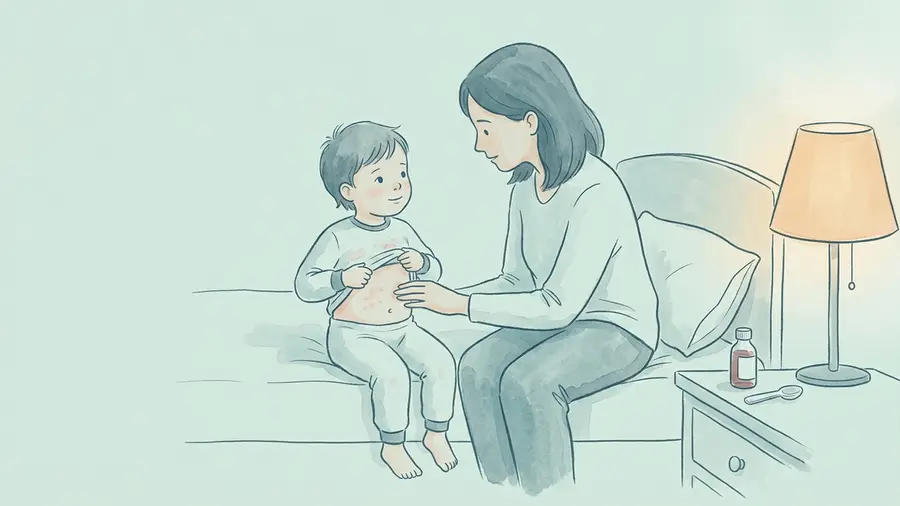
Day three of the antibiotic liquid. As you change your child for bed, you spot red patches on their tummy that weren't there at lunchtime. You're not the only one: with amoxicillin, a skin rash is a common side effect that can affect up to 1 in 10 people. Which signs need help straight away, and what to do until you speak to someone, is easier to sort out than it feels right now.
Is a rash on antibiotics an allergy?
A rash while your child is taking antibiotics is not always an allergy. Most side effects of antibiotics are mild, and a skin rash is a common one with amoxicillin. Allergic reactions are usually mild to moderate. A rash with swollen lips, mouth or throat, wheezing or trouble breathing is different: call 999 straight away.
According to the NHS page on antibiotic side effects, antibiotics can cause side effects such as diarrhoea and feeling sick, which are usually mild and should pass once the course is finished. Rarely, some people have an allergic reaction to antibiotics, especially penicillin and cephalosporins. In most cases that reaction is mild to moderate: a raised, itchy skin rash (urticaria, or hives), coughing, wheezing, or tightness of the throat that can cause breathing difficulties.
The NHS amoxicillin page lists a skin rash among the common side effects that can happen in up to 1 in 10 people. For amoxicillin specifically, it puts allergic reactions at around 1 in 10 people. That is why the tiers below matter.
When is a rash on antibiotics an emergency?
In rare cases, an antibiotic can cause anaphylaxis, a severe and potentially life-threatening allergic reaction. Then you don't wait for the surgery to open.
🚨 Call 999 now if your child:
- has lips, mouth, throat or tongue that suddenly swell, or a face that starts swelling
- is wheezing, breathing very fast or struggling to breathe, or seems to be choking or gasping for air
- has a tight throat or chest, struggles to swallow, or has trouble breathing or talking
- has skin, tongue or lips that turn blue, grey or pale
- suddenly becomes very confused, drowsy or dizzy, or faints and cannot be woken
- is limp, floppy or not responding like they normally do
- has a rash with swollen, blistered or peeling skin
These signs come from the NHS pages on antibiotic and amoxicillin side effects. With a serious allergic reaction, your child may also have a rash that's swollen, raised, itchy, blistered or peeling, and may need immediate treatment in hospital. Do not drive yourself to A&E; the person you speak to at 999 will tell you what to do.
If your child is taking amoxicillin, the NHS says to stop it and call a doctor or NHS 111 now if they get:
- a skin rash with circular red patches and a high temperature
- bruising more than usual, or changes in skin colour
- joint or muscle pain that starts after about 2 days of taking the medicine
- diarrhoea that contains blood or mucus, or severe diarrhoea, possibly with stomach cramps
- pale poo and dark pee, and the whites of the eyes or the skin turn yellow, which can be signs of liver or gallbladder problems
Some of these serious side effects can happen up to 2 months after finishing the amoxicillin. For a milder allergic reaction, such as an itchy, raised rash on its own, call your GP if you're concerned or if it does not get better with treatment; if you cannot contact your GP, call NHS 111. If a sign fits more than one list, act on the higher one. For any other new side effect, contact your GP or the doctor in charge of your child's care for advice. Outside these lists, whether your child keeps taking the antibiotic is a decision for your GP.
The pediatrician asks. You can answer.
Symptom timeline, fever curve, last medication: With Mona you have it all in seconds, instead of guessing from memory.


Side effect or allergy?
Only a doctor can say whether it is an allergy. A few features help you prepare for that conversation.
When does the rash start?
A delayed allergic reaction can happen around 7 to 12 days after taking amoxicillin. It is usually a mild skin rash, but your child may also have a high temperature, joint pain and swollen glands, particularly in the armpit. A mild rash on its own: tell your GP, because any additional side effect is a reason to ask for advice. With joint pain, or with circular red patches and a high temperature, stop the amoxicillin and call a doctor or NHS 111 now, as in the list above.
What does it look like?
The milder allergic reaction is typically a raised, itchy rash, also called hives. A serious reaction can come with a rash that is swollen, blistered or peeling, together with the 999 signs above. On brown or black skin, red patches and colour changes may be harder to see; a blue, grey or pale colour may be easier to spot on the palms of the hands or the soles of the feet.
Diarrhoea and other side effects
Diarrhoea and feeling sick are typical side effects of antibiotics. If your child has diarrhoea, give plenty of fluids, such as water or squash, to avoid dehydration. Signs of dehydration include peeing less than usual or dark, strong-smelling pee. Do not give any other medicine for diarrhoea without speaking to a pharmacist or doctor. If the diarrhoea is severe or contains blood or mucus, stop the amoxicillin and call a doctor or NHS 111, as in the list above. If your child feels sick, simple meals help, and it may help to give the amoxicillin after a meal or snack. For an itchy rash, an antihistamine from a pharmacy may help; ask the pharmacist which one suits your child. Speak to a doctor or pharmacist if a side effect is still bothering your child or does not go away.
Other antibiotics, other warnings
Some antibiotics have their own warnings. Tetracyclines can make skin sensitive to sunlight and sunbeds, so avoid long exposure to bright light while taking them. With fluoroquinolones, the NHS says to stop the medicine straight away and see a GP for tendon, muscle or joint pain, tingling or numbness, swollen ankles, feet or legs, new palpitations or sudden shortness of breath. The leaflet inside the packet lists all side effects of your child's medicine.
What should you note for the GP?
Whether a rash comes from the antibiotic depends a lot on timing. Several of the NHS signs above are about exactly that: a reaction 7 to 12 days after starting amoxicillin, joint pain after about 2 days, or serious side effects up to 2 months after the last dose.
Your GP may want to know: When was the first dose, and when the last? How long after a dose did the rash appear? What did it look like, and where on the body? Has your child had anything else, such as paracetamol or ibuprofen? After three days of a liquid morning and evening, with a fever medicine at night in between, those times blur.
Mona's medication log records every dose with its time, amount and active ingredient, and you add the rash as a symptom with its time. That answers the questions about times and medicines at a glance instead of working them out from memory. A photo of the rash on your phone shows the GP what it looked like, even if it has faded by the appointment.
When did she last have paracetamol?
The question that drives everyone crazy at night. Mona tracks doses and intervals automatically, so no one doubles up.
What happens after the rash?
Whether your child should have the same antibiotic again, and which one to use next time, is a decision for your GP. You can also report a suspected side effect of any medicine through the Yellow Card scheme, run by the Medicines and Healthcare products Regulatory Agency (MHRA).
About this article
Sources
- NHS: Side effects of antibiotics(accessed 2026-10-12)
- NHS: Side effects of amoxicillin(accessed 2026-10-12)
You might also like

Track symptoms easily
With Mona you stay on top of things – even at 3 AM.